Andrea Mirabelli
Andrea Mirabelli (Milan, 1996) graduated in Painting from the Accademia di Belle Arti di Brera and furthered his studies in 2017 at the Universität der Künste in Berlin, where he studied under Michael Müller. He gained experience as an assistant at Laboratorio Avallone (2016–17; 2021–22) and has served as teaching assistant in Contemporary Art History and Contemporary Art Languages at the Accademia di Belle Arti di Brera, collaborating with Elisabetta Longari. Recent exhibitions include Note sulla scultura – Deposizioni at Teatro Pacta, Milan, as well as participation in significant group shows such as NOVECENTO. Il secolo lungo at Galleria Giovanni Bonelli, Milan (2024), featuring an unpublished text by Aldo Nove; La città: tra realtà e sogno at Galleria San Fedele, Milan; and Considering Boiler Venting at A+B Gallery, Brescia (2025)
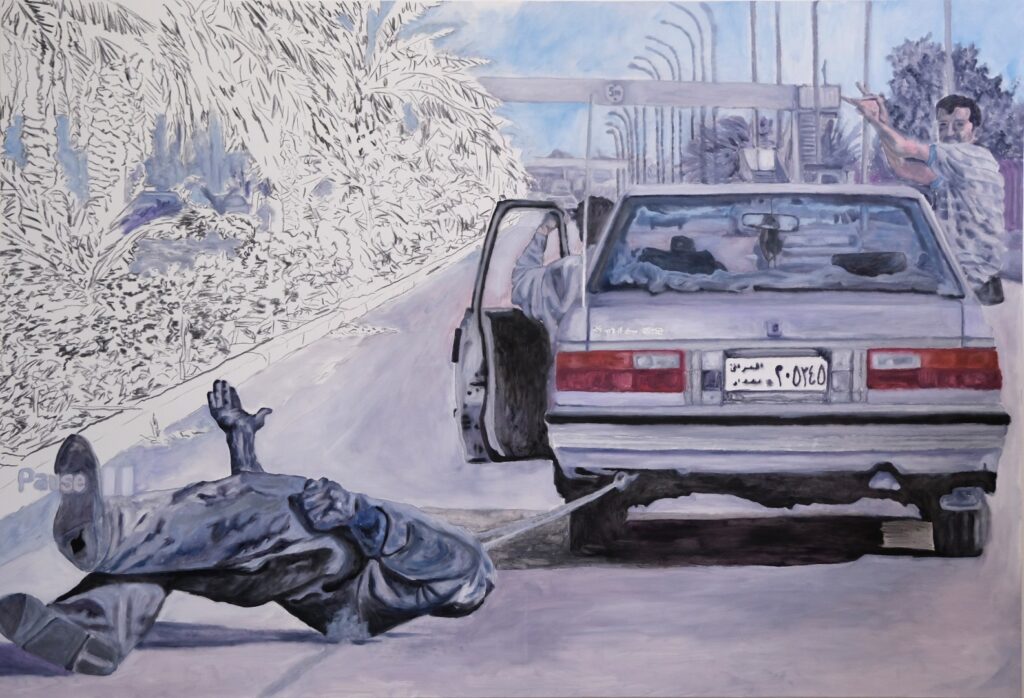
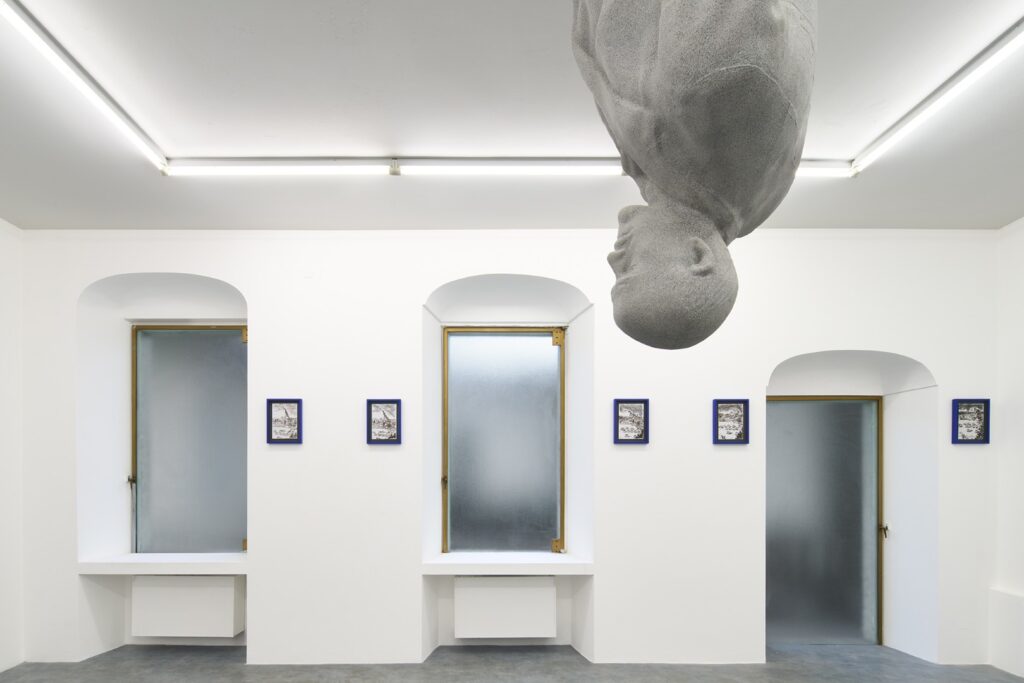
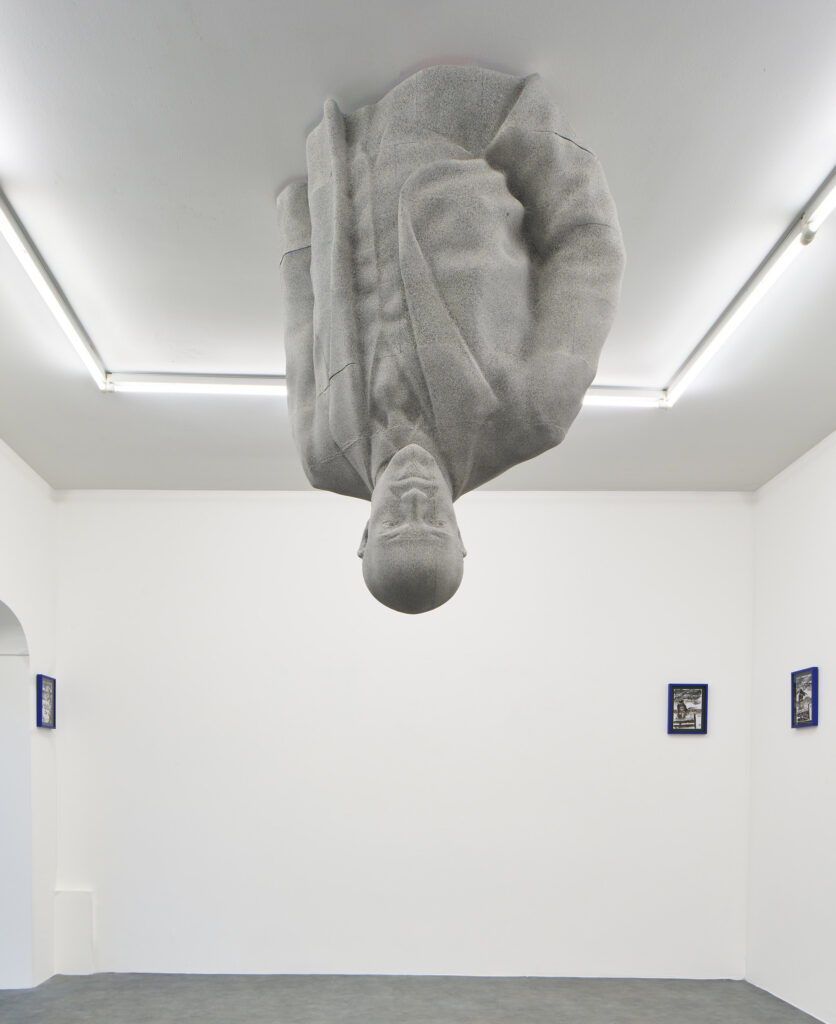
Andrea Mirabelli’s artistic research revolves around an exploration of the role of the monument in contemporary societies and its symbolic value in relation to forms of power and collective memory. At the core of his work lies the image of the toppled statue, an emblematic moment in the overthrow of authority, in which the monument loses its celebratory function.
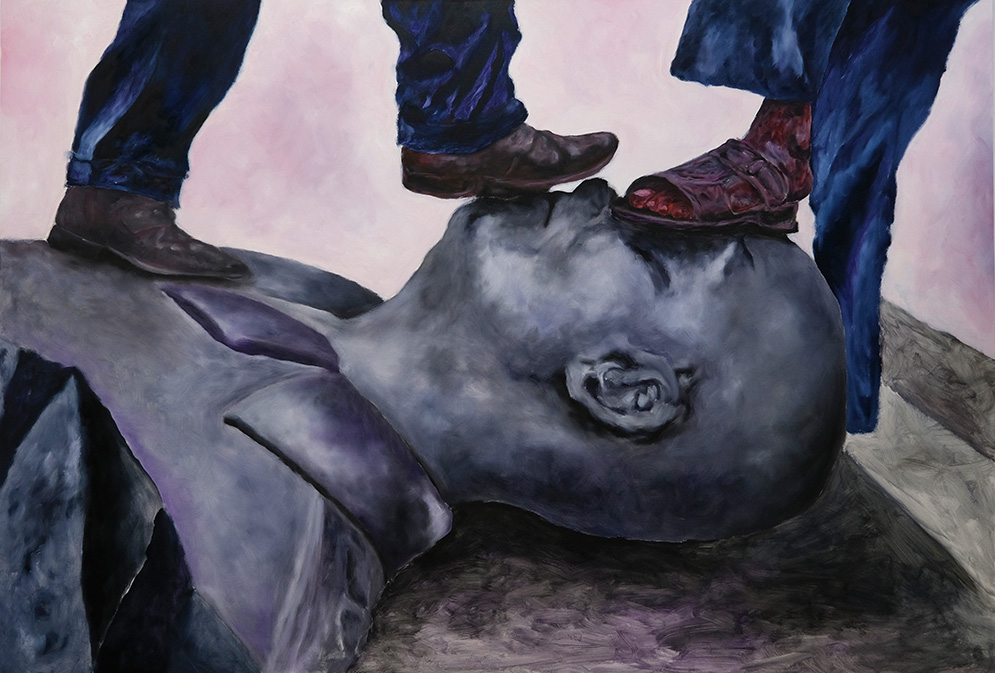
Mirabelli focuses on the representation of these events, particularly on the moment when the statue, a symbol of power, is toppled, reduced to fragments and captured through the gazes and smartphones of onlookers. His attention is directed both towards the collective act itself and its immediate reworking through the photographic and video documentation produced by those present.
These images constitute the starting point for a process of painterly translation grounded in drawing and observation. Their manual transposition onto the canvas establishes a relationship between derivation and reappropriation: while retaining a rigorous compositional structure, the artist introduces autonomous chromatic choices and suspended elements, which contribute to destabilising the scene and heightening its dramatic tension.
Painting is also accompanied by sculptural research, which explores further expressive possibilities through modelling and 3D printing. Within this dialogue between different media, Mirabelli introduces a parodic dimension.
His practice moves between epic tension and a disenchanted perspective, employing paradox and ironic counterpoint as tools through which to question the contradictions and complexities of the present.